Thursday, December 31, 2015

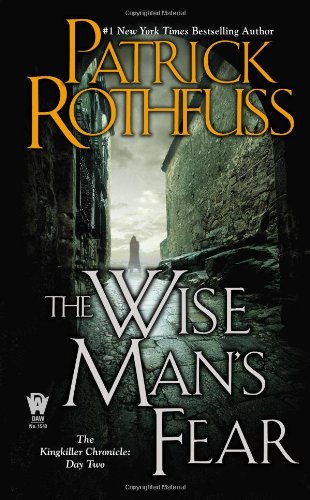
THE WISE MAN'S FEAR, by Patrick Rothfuss (4/5)


Rothfuss is a master of storytelling, in all the most frustrating ways. The prose of The Wise Man's Fear is just as good, if not better than, The Name of the Wind. Kvothe is equal parts compelling and relatable. His adventures are intriguing and fresh in the kind of behind-the-scenes style that this series has innovated.

And yet, several things were frustrating about this book. Like NotW it remains unafraid to stray from the beaten path of conventional plot, but being almost twice as long as NotW, TWMF was at times dragged down by its own meandering. With two thirds of the story told (or so we're led to believe), this book covers surprisingly little ground, to the point that it feels like Rothfuss might be rambling over trivialities to hold back the inevitable. Kvothe's learned some new tricks by the end, but he's still seemingly a far cry from the man of the present "who is waiting to die."

This was also a more political book, and Rothfuss had a few things to say, especially in the Ademre subplot, which perhaps sit too close to his heart, and consequently too close to the surface of the plot. Preachy is a strong word, but parts of the book are just that. Not unforgivable, just distracting.

For all that, I enjoyed it immensely, and cannot wait for the final installment.

Monday, December 21, 2015

The Seven Stages of my "Star Wars: The Force Awakens" Reaction

Like most of the known world, I went to see the new Star Wars on Thursday night. It was a lot to process, but process it I have, and for what it's worth, I've got some things to say.

SPOILER ALERT: This concerns basically every aspect of The Force Awakens, so if you haven't seen it yet, go away.


1) Confusion: The Force Awakens hits you with a lot of exposition, but surprisingly little is answered by the time the credits finally roll.
  • Who is Kylo Ren? 
    • Han and Leia's estranged son.
  • Why is he so pissed at Luke? 
    • No idea, but he was apparently "seduced" by Gollum-meets-Herbert the Pervert...
    • Also, why's he using a voice modulator? His voice is deep enough already.
  • Who is Rey (besides my new dream girl)?
    • Not clear--ostensibly an orphan, but we all know how these things go by now. 
  • Why does she think her fam is coming back for her?
    • No idea, but they're obvi not. 
  • Who's Finn?
    • Another orphan, I guess? I thought all storm troopers were supposed to look like this guy
  • Who are First Order?
    • Unclear/up-jumped Darth Vader fan club?
  • How'd they make a sun-sucking, planet-sized death star, I mean "star killer," without the Rebellion, I mean "Resistance" noticing? 
    • Also unclear, but stop asking so many questions. 
  • Who's Supreme Leader Snoke?
    • Unclear/Palpatine-meets-Wizard of Oz.
    • Why is his hologram so big? What's he compensating for? 

2) Déjà vu: Something about this feels weird.... but I'll worry about that later. Lightspeed ahead!

3) Excitement: This is awesome. I love Finn. I LOVE Rey. Yay--Han's still a snarky badass. This action is dope. This action is ten kinds of dope. Feelz for Han. LIGHT SABER DUEL YAAAASSS GIVE ME MORE. FEELZ. FEELZ FEELZ FEELZ. ZOMG LUKE-I-WAN KINOBI. Roll credits.

4) Realization: (after approx. 45 minutes of uneasy reflection) ........ Holy shit. Was that what I think it was? Nooooo......

5) Betrayal: It was what I think it was!
  1. Desert planet? Check. 
  2. Messenger with crucial intel captured... by Blacked-masked Bad Guy with red light saber? Check.
  3. Messenger entrusts the crucial intel... to a droid? Check. 
  4. Droid escapes... into the desert? Check. 
  5. Our Hero finds droid... and learns about the crucial intel it carries? Check. 
  6. Storm Troopers are after our Hero and co., so they escape... in the Millennium Falcon? Check.
  7. Visit to a blue collar cantina full of hard-scramble smugglers and frequented by the infamous Han Solo? Check.
  8. Special delivery to a rag-tag group of X-wing flying good guys! Who wants some crucial intel? Check.
  9. A planet-sized battle station threatens the galaxy... by destroying planets with its laser cannon? Check. 
  10. Gotta save Strong Female Lead from Black-masked Bad Guy... on planet-sized battle station? Check. 
  11. Black-masked Bad Guy kills our Hero's Mentor, who doubles as Black-masked Bad Guy's former father figure!? Check, damn you.
  12. Our Hero is threatened by Black-masked Bad Guy, but ultimately wins the day by learning to harness the power of the force? Check.
  13. Strong Female Lead = safe, let's destroy planet-sized battle station... by bombing its super obvious weak spot which we can shoot with missiles from X-wings? Check check check.
  14. Planet-sized battle station destroyed, galaxy safe for now... but bad guys escape? To be continued? Check...

I can't believe those Mickey Mouse bastards just grafted the plot of A New Hope onto a new generation of characters and called it a day. That wasn't The Force Awakens; that was "Star Wars: A NEW New Hope." Wtf, J.J. WTF.


6) Inner Conflict: The Force Awakens was dope as a standalone movie. Fun, poignant, exciting, intriguing, suspenseful. Superficially, a slam dunk, as indicated by its early box office trends. BUT...

As a Star Wars movie, The Force Awakens has done a disservice to the franchise by functioning as an ALMOST beat-for-beat remake of the original Star Wars plot. What am I supposed to do with that?

7a) Rejection: I hate you, J.J. Abrams. You had the chance to do what every child dreams of--tell your own Star Wars story, but you and Disney were so chicken shit scared that the die-hards would shout "This isn't my Star Wars!" like they did with the Prequels that you went with the one thing you knew they couldn't complain about--the EXACT same story that made them fans. But bravo. You managed to fool me into buying tickets to a movie I already own on DVD. Is this payback for the Prequels? Is it? Was it worth your soul? Shame on you, sir.

7b) Acceptance: Maybe (Probably) I'm taking this too seriously. I'm not without sympathy; I get there's an entire generation of O.G. fans out there who have thirsted for another dose of the original movie's magic for 40 long years. I could view The Force Awakens as a product of equal parts laziness and cowardice, or I could take it for what it perhaps aspired to be: Star Wars for a new generation. And not just a Star Wars; THE Star Wars. Giving a familiar tale a 21st century upgrade without committing the ultimate disservice of a reboot. How thoughtful of you, Mr. Abrams. You've taken a story beloved by a generation, and you've repackaged it for their kids. Common ground all around. Hurrah!

***

So there you have it. Currently, I am split between my last two options: rejection and acceptance. I refuse to hate this movie for all its flaws, but I also refuse to love it despite them. After all, can you really blame Kylo Ren for wanting to be just like Grandpa Vader? Should we condemn him for thinking that if he dresses in black leather and uses a voice modulator just like his old man, people will start to treat him like the Sith Lord he aspires to be? My heart tells me... not yet. In fact, I think there's a third option that fits my feeling best: 

7c) All Of The Above. Final answer, Regis. I'm hugely disappointed that Abrams and co. leaned so heavily, so very heavily, on the plot of A New Hope. The saving grace of this movie was the A++ stable of new characters, Rey, Finn, Poe, etc., and I believe they could have carried their own story, but now we may never know, because Disney was too scared to bank on an untested product.

And yet, I understand why they did it. The Force Awakens is an obvious response to the Prequel Trilogy, which, though it was by no means perfect, has been unfairly ridiculed for over a decade because it dared to tell a different kind of story in the Star Wars universe. So with Episode VII, Disney chose to go back to basics, to make a safe bet that would earn out their $4 billion investment. Frustrating, but understandable.

So long story short, I've decided to hold off on ultimate judgment until the new trilogy stands complete. Or, at least until I've seen Episode VIII, which will soon begin production under the working title, "Star Wars: The First Order Strikes Back."

Not really. At least, I hope not really. But actually, maybe. Dammit, I give up.

Wednesday, September 2, 2015

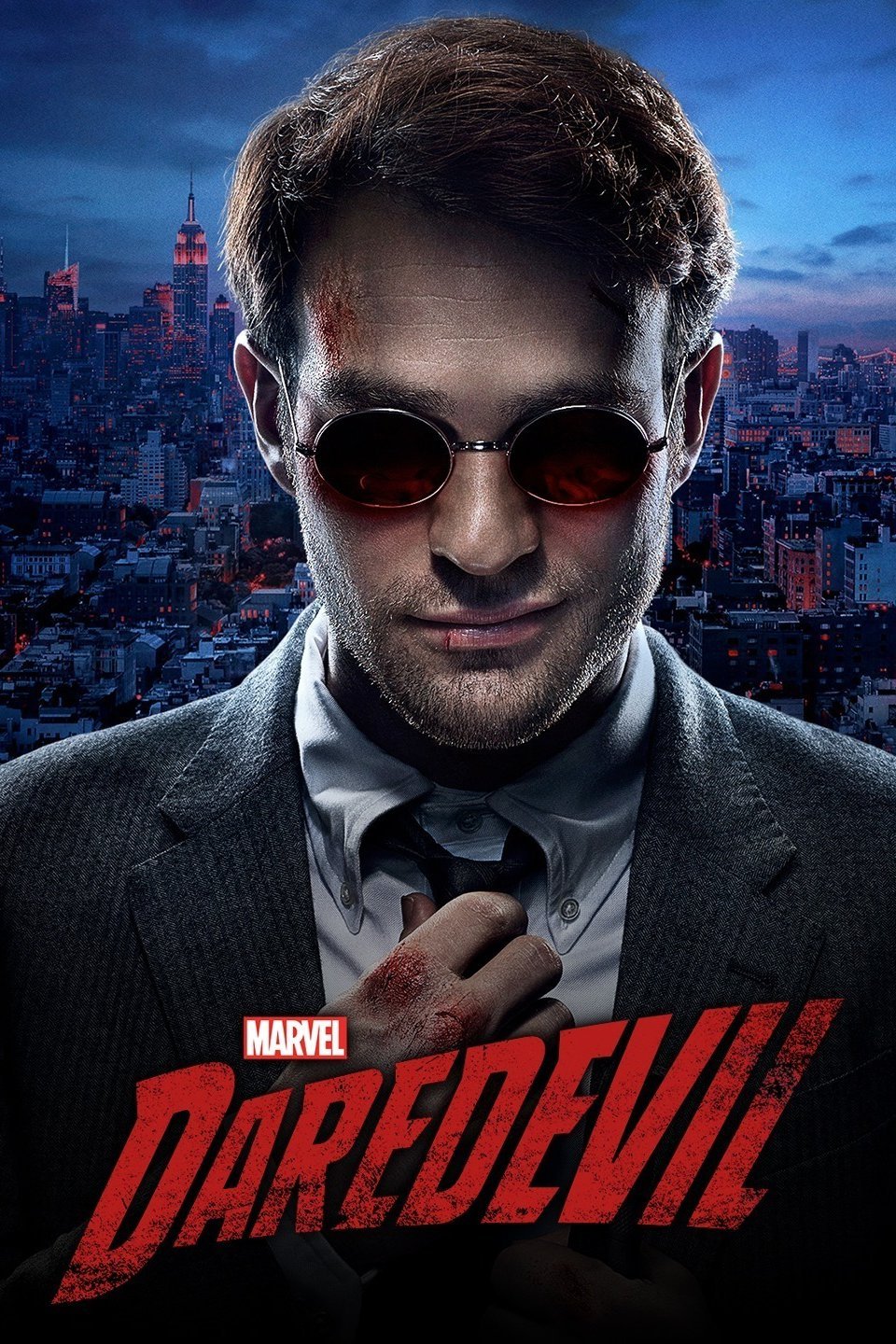
DAREDEVIL Season 1; or, Cleaning the Clichés from the Steets of Hell's Kitchen


Oh DAREDEVIL, where do I begin? I'd ask you to show me the way, but then we'd have a blind leading the blind situation.

I suppose the best and most appropriate way to start this review would be by saying I LIKE superheroes. And who doesn't? Superheroes, in whatever form, be it print or digital media, are almost always a fun time, and though that seems a simple analysis, it's the core reason superheroes are dominating the box office right now. Not everybody is looking for the answers to this week's existential crisis neatly packaged into an hour and forty-five minutes of hard stares, subtext, and timely orchestration. Some people just want to have a good time; some people just want to watch chaos from the safety of their couch cushions.

Thursday, August 27, 2015

On My Excitement Over an Upcoming MTV Series.... Wait, What? THE SHANNARA CHRONICLES


When I was in high school, the administration suffered through a brief experimental phase that corresponded to my junior and senior years. During this trial by fire, they subjected the students to several "non-traditional" learning and enrichment courses, including family style lunches which leaned heavily on bagged salad and microwave chicken, and though the program as a whole would die out after two years, there were a few initiatives within the movement which weren't half bad.

Monday, August 24, 2015

Quote of the Week for 8/25/15

"The most dangerous phrase in the language is 'we've always done it this way.'"
-Rear Admiral Grace Hopper

Wednesday, August 12, 2015

TRUE DETECTIVE Season 2: Frankly Apoplectic


Let me start by saying this season of TRUE DETECTIVE was doomed to fail; nay, destined. Expectations were too high across the board, from #truefans who thought the series creator, Nic Pizzolatto, was the second coming of William Faulkner, to the #haterz who demanded Pizzolatto put the cap back on the can of existential worms he opened with his bayou barn burner last spring. Both camps were inevitably disappointed by Season 2, but like I said, that was bound to happen. So what did we really get from the sophomore effort of television's most controversial ride-along drama?

Friday, July 31, 2015

THE MARTIAN, by Andy Weir (4/5)

http://goo.gl/rkcxay

4.5 stars, really. Would have been 5, but I'm trying to be more selective with my perfect scores.

Anywho, this book was incredible on several counts. First and foremost is the science. Never before have I read hard science fiction so accessible, and the humor went along way toward that, but honestly the scientific applications just felt real throughout. The problems were consistently variable and escalated in intensity, and the solutions were always equal parts genius and digestible simplicity. Does that make any sense? If Andy Weir were writing this review, it probably would.

Monday, July 27, 2015

Quote of the Week for 7/27/15

"Don’t worry about people stealing your ideas. If your ideas are any good, you’ll have to ram them down people’s throats."
-Howard Aiken

Thursday, July 23, 2015

HOUSE OF CARDS Season 3: Cracks in the Foundation

[WARNING--> SPOILERS AND THE LIKE]

(I don't actually know how spoilery I should get with this thing, so mainly gonna talk about my feelz. There are so many.)

Of House of Card's existing three seasons, this was my second favorite so far. Season Two's plot I found increasingly unbelievable and overwrought, but regardless of my qualms, Season Three picked up where Two concluded, so here we are. Frank is president. How he got there is no longer relevant, because it's a new day, a new election cycle, and the POTUS has his eye on 2016.

Monday, July 20, 2015

"Nazi Summer Camp" by RADIOLAB; or, The Greatest Generation

In this sobering age of killing sprees, racial tension, and the many-headed hydra that is the war on terror, it's so easy to feel weighed down. Humanity fights like a house divided, a Shakespearean tragedy barreling its way toward its inevitable, disastrous end. Depressing, no? 

I've been fighting that sense for a while now, and I can feel it slowly taking hold, depressing my outlook, but that doesn't mean there aren't bright patches to counter the hum-drum. A story I heard over the weekend, for example.

I drive often between Nashville and Winston-Salem, NC, and what fills most of that time for me is podcasts (which I've previously blogged *read:gushed* about here). I recently subscribed to a new one called the Radiolab--the 3rd most popular cast on the internet, according to iTunes--and the first episode I chose was one entitled Nazi Summer Camp.

I'm glad I did. It's the story of the nearly HALF MILLION Nazi, Italian, and Japanese Prisoners of War kept on American soil during WWII, and though that tagline may sound ominous, the truth is anything but. As it turns out, the "Greatest Generation" wasn't just great because they volunteered in droves to fight for freedom, donuts, and the American Way; they were great because they had every right to fight fire with fire, to give into their baser instincts, their pettiness, their justifiable (or not) hatreds, but instead they chose to hold themselves to an ideal of decency and compassion.

Long story short? They treated their enemies well, and continued to do so, though their enemies chose not to return the favor.

Please listen to the podcast, if you're needing a pick-me-up. It's only 30 minutes, and well worth your time. I've included the link both above and below.

http://www.radiolab.org/story/nazi-summer-camp/

And if you'd like more podcast recommendations, just ask! I actually listen to way too many.

TG

Tuesday, July 14, 2015

Quote of the Week for 7/13/15

"Lord Henry had not yet come in. He was always late on principle, his principle being that punctuality was the thief of time."
-Oscar Wilde, The Picture of Dorian Gray

Monday, July 6, 2015

Quote of the Week for 7/6/15

"A fine beer can be judged with only one sip, but it's best to be thoroughly sure."
-Czech Proverb

Thursday, July 2, 2015

WILD SEED, by Octavia E. Butler (5/5)

https://waynebarlowe.files.wordpress.com/2011/07/wild-seed-copy1.jpg

I get the Butler hype. I loved this book.

In a good year, I read 25-30 books. Maybe one a year serves to capture me the way Wild Seed did, enthralling from the first pages, compelling with its conflicts, fascinating with its magic. The resolution was somewhat unsatisfying in the moment, but only because, for a while, I'd convinced myself that this story was heading toward tragedy, when the beginning had actually promised a love story. I was so afraid Anyanwu would never regain her agency. I thought Doro unredeemable, though I'd started out liking him and felt he cared more than the narration would ever let him properly admit.

I was wrong on both counts, and the finale was so deftly orchestrated that it had me rooting for the "villain," for the sake of what and who he loved. That's how you know you've just read a special book--you want happily-ever-after for all the characters, even the bad guy.


As for the protagonist, Anyanwu, she really didn't need any help winning admiration. In fact, her one flaw seemed to be a distinct lack of flaws (much like Ender Wiggin in Speaker for the Dead by OSC, which I reviewed last year), but I've never been a subscriber to the law that your protagonist must be significantly flawed. Not every superhero needs kryponite, they just need to be human enough to struggle with the obstacles placed before them. It's the author's job to make those obstacles big enough that the reader believes even a superhuman can struggle with them, and that's what Butler has done with this book by pitting the perfect human against her antithesis, the perfect inhuman. A compelling read, from the first page to the last.

Quote of the Week for 6/29/15

"Marriage has many pains, but celibacy has no pleasures."
-Samuel Johnson, The History of Rasselas, Prince of Abissinia 

Tuesday, June 30, 2015

THE TORTILLA CURTAIN, by T.C. Boyle (3/5)


The Tortilla Curtain is about two men, Delaney and Candido, who are tied together after Delaney hits Candido with his car in the opening scene of the book. Things only get worse from there for Candido, who is an illegal immigrant with a pregnant wife, and Delaney's got his own troubles, including dogs which keep getting eaten, a ball-busting wife, and an inferiority complex which drives him toward hatred of all things migrant, especially Candido, whom he cites as the source of all his 1st-world problems.
This book would have been a 2/5, as 75% of the plot is just the unrelenting depression of foolish people in shitty situations that trend shittier out of control, but the quality of the prose saved it for me. Boyle deals deftly in the transitions between lyrical and blunt, and that for me was the strength of the book.
As far as weaknesses, I feel this story falls into the "literary" trap. Literary Fiction is so often marketed as "realistic," but I find more often than not that lit fic eschews true-to-life realism in favor of flashy, inescapable tragedy. That's fine for a 2 hour play, but over a 400 page book? It gets discouraging, especially with a book like this, which starts at a low where most real lives bottom out, and only gets worse from there. 
A masterclass in empathy, but one that makes you regret taking the course.

Thursday, March 5, 2015

On Fantastical Excursions and THE BURIED GIANT; or, "It's okay to write about British cultural identity as relating to war, but only if there aren't any wardrobes involved."

Much and more has been said of late about Kazuo Ishiguro's latest novel, The Buried Giant, some great, some not so great. Ishiguro, it seems, is rather hesitant to label his book a fantasy, though it's set in Anglo-Saxon Briton. And there are ogres. And knights. And a dragon that breaths forgetfulness mist. But, of course, this book cannot be so easily categorized, as it deals with adult themes and national identity and yada yada blah blah. 

Still, it is Ishiguro, and I've got a soft spot for English-speaking Asians who wear big, round glasses, so color me torn. Then I read this interview on Goodreads, and wouldn't you know it, but the interviewer, whose first name is a last name, so you know he's distinguished, opens with this little zinger in the preamble to the interview proper: 

"But don't be fooled by the fantastical excursions into Tolkien territory: This is still very much a wise, and relevant, literary investigation..."


This is, frankly, insulting. As if excursions into the fantastic would normally have precluded any wisdom or cultural relevance from appearing in the work. The most limiting lie anyone has ever told themselves is that because they liked a thing as a child, that thing must be childish, and therefore unworthy of their adult attention. Works of fantasy suffer under such misperceptions all the time, but it should not be so.

All works of fiction are fantasy. A character is made no more real because he lives in Manhattan, rather than Narnia; they are both fake, plain and simple. The wisdom and relevance of a work are derived from the universal experiences made particular by the author in his characters. Such is recognized by the reader no matter the setting. It is not seen, but felt in the heart and in the mind.

For an example, let's take "Tolkien territory." Tolkien, a WWII vet, was much affected by his time serving his country, and that experience we can see reflected in Frodo, who upon returning to the Shire finds himself unsettled in a setting he once found familiar and comfortable. Frodo has been changed by his traumatic journey with the ring, so much so that, though his task is complete, and by all rights he should get his well-earned rest, Frodo feels compelled to leave his home and his loved-ones in an attempt to regain some measure of the inner peace he's lost. In the world of the 50's, when PTSD was still decades from being understood, and thousands had returned home from the battlefields of Europe to discover they too felt a similar anxiety in returning to their day-to-day, Tolkien's portrayal of Frodo's stoic disquiet bore massive cultural and emotional weight, and still does today.

I was incredibly disappointed after reading Ursula Le Guin's rebuke of Ishiguro earlier this week, but at least during this interview, he deftly handled (rather, side-stepped) the questions about genre perception and stigma, though this pacifism may be, in fact, a direct result of the admonitions he received from Le Guin and others like-minded. This interviewer, however, could not manage to purport himself with quite so much grace. He tipped his hand early as a literary bigot, and ruined what may have been an otherwise intriguing interview for me.

I may read this book. I may not. I suppose it will just depend on how relevant I'm feeling, and how wise.

Wednesday, October 29, 2014

On THE LEGEND OF KORRA: The Avatar State


So the Legend of Korra's got me super confused. Again.

There I was, four episodes into season 4, and Korra seems to be traipsing all over The Last Airbender's memory once again. This time my beef was with her ability to assume the Avatar State.

The Legend of Korra has been nothing if not confusing, and at many points contradictory. The Avatar State is a perfect example. In TLA (The Last Airbender), we learned that the Avatar State was the current avatar's ability to channel his (or her) past lives in a way that gave he (or she) access to all the wisdom and power of his (or her) predecessors. Confusing? A little. Vague? Yeah, but whatever. Cool? Duh.

In TLA, the audience was made to think of the Avatar as an element-bending Dalai Lama. Both bald, both spiritual leaders, both with a fondness for red and yellow robes. And both were perpetually reincarnating spirits tasked with guiding the free world. Right, got that. To get metaphysical for a minute, the concept of the Avatar in TLA was that the avatar spirit never died, and was reincarnated in each new avatar. Each avatar was basically the same person, but in a different body, and with their own experiences. Aang was Roku. Roku was Kyoshi. So on and so forth. Again, confusing, but people rarely need (or want) their spiritual beliefs over-analyzed. Reincarnation is a common and accepted thing in several eastern philosophies. We went with it. Cool. Past lives. One in the same. Still got it. 

But if you do over-analyze it, the nature of the Avatar raises some seemingly contradictory existential dilemmas: How can avatars be themselves AND someone else? If they're the same person, how can they still speak to one another individually, like different people? Korra should be able to remember BEING Aang, and Aang should be able to remember BEING Roku. Speaking to one's past life like a grandchild to a wise, loving grandparent seems redundant; why not get those memories and experiences in First Person POV? Korra IS Aang, just like you ARE you and I AM me. Sure, you COULD speak to yourself, but not to tell yourself what you already know. It's more of a comfort thing, at least for me, but who's counting?

The Legend of Korra attempted to solve all those fishy existential mysteries with Raava, the giant silver and white immortal Light Spirit that lives inside each Avatar like a bad case of ring worm. For the first time, the Avatar State was concretely defined; it was given a mechanism. The Avatar State was not, in fact, the channeling of past lives, but the channeling of Raava, who herself is connected to all the Avatars, past and present. She was the hidden telephone by which Aang spoke with Roku, and by which Korra spoke with Aang. The Avatars AREN'T all the same person, with the Avatar spirit. Raava IS the Avatar spirit, and each new Avatar is a vessel she chooses, an individual with his (or her) own soul. You could say Raava is the real Avatar, the ONLY Avatar. The human Avatars are just the sharks that little Raava suckerfish uses to hitchhike around the ocean. The Avatar Spirit is the Avatar, but the Avatar isn't the Avatar Spirit. God, that's confusing.

So what does that mean for the Avatar State? As I've just said, it's the channeling of Raava, who, through her connections with past Avatar souls, can make the current Avatar much more bad ass. It's like Korra's body is a Gundam suit (a giant, brainless, fighting robot, for the layman), and, normally, Korra's soul is the pilot, but during bursts of Avatar state, Raava (a.k.a. the Avatar Spirit) takes control of the Gundam and goes ham sammich on whoever is in the way. 

I didn't understand this right away (can you blame me?), and so Season 3 of the Legend of Korra, especially the finale, was frustrating. "How can she achieve the Avatar State?" my little nerd heart cried out. "Zahir's poison shouldn't work, because Korra's connection to her past lives was severed last season!"

Excellent point, My Little Nerd Heart. I now think I have the answer, thanks to some Avatar Wiki.

The Avatar Spirit IS Raava. Raava is immortal, but can be "killed." This happened in the Season 2 finale. Unalaq (Korra's uncle and Season 2's Big Baddy) and the Darkness Spirit, Vaato, dragged Raava out of Korra and destroyed her. But there can be no darkness without light. Yin and Yang. Good and Bad. Raava was reborn inside Vaato, Korra ripped her out, they recombined, happy ending. But this Raava was not the same old Raava.

Think of it like hitting the Reset button on... something that has a Reset button. The old Raava had all these experiences and connections with past Avatars because she was there, swimming around inside them like a parasite of Goodness, but when she was destroyed and reborn inside Vaato, all that stuff was lost. This version of Raava has had all the factory defaults restored. No more past lives; this new Raava didn't know any of the old Avatars, just Korra. Korra is essentially the second "First" Avatar.

The writers of the Legend of Korra aren't contradicting themselves by letting Korra still go Avatar State, but when Korra goes Avatar State from now, it really shouldn't make a difference. The old Raava had connections with all the old Avatars--that's what made her Avatar State powerful. This new version of Raava only has a connection with Korra. So the Avatar state is basically just Korra using Raava to connect with... herself. The Avatar State is no longer an advantage, and it never will be for Korra. Not until the next Avatar will it be useful, because then the new Avatar will be able to channel Korra's wisdom and power (what little of it there is) through new Raava.

I think. 

Okay, rant over. Thomas out.


Thursday, July 31, 2014

Quote for the Week of 7/28/2014

"I think you can't possibly know the truth about someone unless you love them."
-Orson Scott Card, Speaker for the Dead

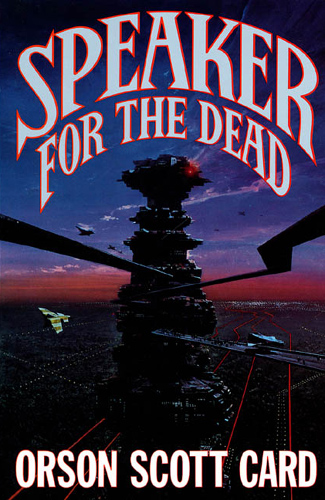
SPEAKER FOR THE DEAD, by Orson Scott Card (5/5)


So I'm going to do some book reviews now. Not so much because I feel any particular need to make known my opinions, but because my memory, as far as memories go, isn't super, and in 8-12 months I know I'm going to need some sort of written aid to help me remember not only what happened, but also who did what, and what I liked about them. So yeah.

Speaker for the Dead:

I liked this book more than I thought I would. Loved it actually, and that was really surprising, because when I read Ender's Game about four years ago, my principle reaction was, Eh, kinda slow. The twist at the end blew me away, but struggling through 200 pages of cryptic dream sequence and battle school strategerie wasn't exactly my definition of "worth it."

Speaker for the Dead wasn't that. The stakes were monstrous right from the word "go," the characters were varied and relatable, and the world building felt so natural in its uniqueness that I never once felt the need to question it, even though, half the time, they spoke about it in Portuguese. 

This book came out almost 30 years ago, so I'm a little late to the party, but I now get why Card is perhaps the biggest name in Science Fiction, ever. Ender's Game was Card's first exploration into Ender's world, and in several respects this was apparent. In Speaker, Card has perfected and mastered his world, and it makes this novel an exciting and thought-provoking read from beginning to end. 

My beef with many works of SciFi is that the stories trend toward the unrelatable. The authors get so excited about their SciFi universe that the character development takes a back seat to the world development, and that rarely flies with me (pun intended), even in short stories, but especially in novels. 
Not so in Speaker. The world feels so natural, so quickly, that both author and reader are free to focus on the tortured Novinha, the stoic Miro, and the singular Ender from the very beginning. It's the perfect storm of characters who fit naturally into their environment, even as the seek to change it.

My one criticism is small, but notable. For a work filled with deeply flawed, imperfect characters, Ender is surprisingly flawless. He's a genius, he's compassionate, he's perhaps the most perceptive and empathetic human being ever, and he's relentlessly driven to correct a wrong for which he, arguably, isn't to blame. He's pseudonymously published his own space-age humanist Gospel, inadvertently founded his own religion, he hates no one, understands everyone, and still has the time to become functionally proficient in Portuguese in under three weeks. All his B.M.'s are single wipers, he's pitch-perfect as both a Tener 1 and a Bass 2, and he's the most generous lover from here to Trondheim. Some guys just got it all.

And yet, despite his seeming perfection, Ender still manages to convince me of the difficulty of all his decisions, as though his 3000 year unbeaten streak were on the line with every one, and that's what makes him a true champion: he's got the goods, and he knows how to use them, just like this book.

5/5

Thomas out.

Thursday, July 10, 2014

On Pointing Fingers (Middle East Edition)

When it's time to play the blame game, you rarely find someone willing to point the finger at himself. (Time to use this here blog as my own personal pulpit for a minute, if you'll excuse me.)

Had a semi-heated conversation with someone today. It started over a video of a politician rebutting a young American Muslim woman over the idea that peaceful Muslims are being blamed for the actions of a few radicals. The politician made several good points, by way of analogy. Most Germans of the 1940's were good, peaceful people, but the Nazis still managed to kill millions of people. Most cold war era Russians were good, peaceful people, but the Soviet Union still killed millions of people. Most Japanese people were good, peaceful people, but the Japanese army still tore through east Asia during World War II. The woman's point was that defending the innocent majority is a politically correct, superficial gesture because the innocent majority was irrelevant; despite their own sentiments, they did not stop an evil entity (no matter how anomalous) from rising up and being allowed to control their culture.

Back to my conversation. Person 1 wants the good, peaceful Muslims to acknowledge that there is some issue intrinsic to Islam that predisposes its adherents toward radicalization. He wasn't saying that all Muslims were bad, or likely to become radical; he simply wanted Muslims stop pointing the finger at the US and take a gander at their own fuzzy navels. What exactly about Islam, Muslims should ask, is leading to this predisposition toward radicalization?

Person 1 used the example of the Catholic priest pedophilia scandal as an analogy. As a Catholic, you couldn't reasonably stand up and claim that the Catholic Church wasn't at least a little bit to blame for allowing those heinous acts to happen under its watch, right? Of course, that's reasonable. The Church really screwed the pooch on that one. Our bad, guys, we'll keep a closer eye on those pedos next time.

But just as it's not fair that the Catholic Church should shirk responsibility,  it is also not fair that regular Catholics be made to answer for the crimes of the deviant. Is there something about Catholic teaching that led to a score of robed men molesting young boys? No, there is not. Is there something intrinsic to German-ness that predisposed its people toward Nazism? Also no. Is there something about proper Islamic teaching that's spawning terrorists in TNT-laden sport coats? Nope. That too is a false assumption.

There is such a thing as evil in this world. There is NOT such a thing as evil that arises in a vacuum.

Was Germany to blame for the rise of the Nazis? Yes. Was the Catholic Church responsible for the pedophilia scandal? Also yes. But you can't ignore the circumstances.

The original Nazi message wasn't "hey, lets go kill as many minorities as we can, that aught to make us feel better;" their message was "hey, the rest of Europe really screwed us with those war reparations, and it's looking pretty rough right now, but Germany was once great, and it can be great again, if you trust us."

Guess what those priestly pedophiles were, before they were priests. Any guesses? That's right. They were pedophiles. And last time I checked (which I admit, I haven't checked in a while, but I'll make an educated guess) on the application for Catholic seminary there isn't a Check Yes or No box for "Are you a pedophile?" Although there might be now. Who knows? Couldn't hurt.

The point is this--throughout the entire course of human history, when bad people are given an opportunity to gain power over others, they become very predictable. They deceive, they hurt, and they look out for #1. And the more it works out for them, the more they continue to do it. There isn't something wrong with Islam because a group of a-holes with an ax to grind have gone to one of the poorest regions in the world and spread misinformation and propaganda against the USA, then drawn the US into a decade-long struggle which, among other things, has reinforced their deceptions and hatred.

Was the US justified in wanting to root out Al Qaeda and eradicate them? I think so. Has it worked out so well for the Afghanis? Not so much. When the jerk who lives down the street and the jerk from out of town are shooting missiles back and forth across your front yard, the jerk from out of town might be justified in trying to blow your neighbor up, but who are you most likely going to blame when a rocket blows up your cat? Not the guy you're going to have to live with, when the fight is over. Better the devil you know, than the devil you don't.

To bring it back home, when we go out and about looking for someone to blame, don't expect anyone to stand up and volunteer their head for the chopping block. Unless he's the Brazilian National Team coach. That guy's a class act. And that mustache? Top notch.

During the pedophilia scandal, every Catholic with any kind of sense was quick to stand up and say, that's not us. That's not Catholicism. We reject those men as deviants who have abused their power and betrayed their faith.
After WWII, every German with any kind of sense stood up and said, hey, don't blame me! How was I to know? Those men lied to us all. I'm sheltering five Jews, three Gypsies, and a lonely Pollock in my sub-basement right now, go check.

Good people should always step up to fight against evil, especially when that evil has arisen within their own culture, but just because these people have a responsibility to fight against it doesn't mean they have a responsibility to answer for it. The nation of Islam, as a people, is partially to blame for allowing the recent rise and propagation of anti-Western radicalism. I think that's fair. But they should not be made to admit that something fundamental to the Islamic faith is the root of the problem. People looking for that admission just want something to blame, something to condemn. They fear the radical minority, but can do nothing about it, and so they need someone who is willing to step up and take their blame bullet. Somebody who won't shoot back.

But in the immortal, aphoristic words of Yoda, "Fear leads to Anger. Anger leads to Hate. Hate leads to the Dark Side." Start playing the blame game, and before you know it, somebody's making a trio of underwhelming prequels about your tragically misguided youth. And nobody wants that.

Thomas OUT.